

Cart
0

What Home Detox Really Means (And What It Doesn't)
If you've ever typed "how to detox at home" into a search bar, you've probably been hit with a wave of quick fixes, miracle cleanses, and pricey juices promising a total system reset in just a few days. The reality is, the word "detox" has been hijacked by some clever marketing. A genuine detox isn't about extreme measures; it’s about supporting the incredible self-cleaning systems your body already has.
Think of your body as a highly efficient machine. Your liver, kidneys, digestive tract, skin, and lymphatic system are always working to filter, process, and get rid of waste. A real home detox isn’t about forcing this process with harsh rules but simply lightening the load on these crucial organs. It's about consciously choosing foods and actions that help them do their jobs better.
The Myth of the Quick Fix
Many commercial detox plans are built on severe calorie cutting or eliminating entire food groups. While you might see the number on the scale drop after a three-day juice cleanse, this is mostly water weight and glycogen loss, not the magical "purging of toxins" you were promised. This approach can backfire, as your liver actually needs specific nutrients—like amino acids and B vitamins from whole foods—to do its detox job correctly. Starving your body of these essentials can actually slow the whole process down.
The desire to cleanse the body is nothing new. In fact, detoxification practices have a rich global history. Evidence shows detox methods dating back to 2000 BCE, with traditional practices like Chinese acupuncture and Indian Ayurvedic medicine highlighting the need to purge impurities for better health. This long-standing interest proves that supporting our bodies is a timeless goal, but our modern approach should be about sustainable support, not temporary punishment. You can explore the fascinating history of detoxification to see how these ancient practices have evolved.
What a Healthy Home Detox Looks Like
So, what does a helpful home detox actually involve? It's a mental shift from a short-term "cleanse" to long-term wellness habits. It means building a foundation of supportive practices that give your body the tools it needs to feel its best.
Here’s what that looks like in the real world:
- Supporting Your Body, Not Replacing Its Functions: Instead of a restrictive liquid diet, you focus on eating whole, nutrient-packed foods that give your liver the building blocks it needs to function.
- Reducing Incoming Load: You become more aware of your environment, maybe by swapping harsh chemical cleaners for natural ones or filtering your drinking water. This cuts down on the number of outside toxins your body has to deal with.
- Enhancing Elimination Pathways: Simple actions like staying properly hydrated, getting gentle exercise to get your lymphatic system moving, and eating enough fiber are key. These practices help your body efficiently remove the waste it has already processed.
Ultimately, learning how to detox at home is less about a dramatic, short-term event and more about adopting a lifestyle that consistently supports your body’s natural strength and resilience.
Transforming Your Home Into a Detox-Friendly Space
When you first hear about learning how to detox at home, your mind likely goes straight to what you eat and how you move. But what about the space you live in? The air you breathe and the surfaces you touch every day play a massive part in your body's overall toxic load. Creating a detox-friendly home isn't about tossing everything you own and living in a sterile bubble. It’s about making smart, simple swaps that add up to reduce your daily chemical exposure.
Think about it this way: if your body is a boat and you’re constantly bailing out water (detoxing), wouldn't it make sense to first plug the holes letting the water in (environmental toxins)? A perfect place to start is right under your kitchen sink. Many popular household cleaners are full of harsh chemicals like ammonia and phthalates. Switching to cleaners made with plant-derived ingredients or a simple DIY mix of vinegar and water can dramatically cut down on the chemical fumes you're breathing in.
Breathe Easier and Reduce Your Load
One of the most effective changes you can make is improving your indoor air quality. It's a surprising fact for many, but the air inside our homes can sometimes be more polluted than the air outside. A beautiful and simple way to tackle this is by adding some houseplants to your space.
- Snake Plants are fantastic because they are incredibly easy to care for and are well-known for filtering indoor air.
- Spider Plants are champs at removing common household toxins like formaldehyde and xylene from the air.
- Peace Lilies can help neutralize toxic gases, including carbon monoxide.
These plants work as nature's air purifiers, quietly cleaning your environment around the clock. A family I know put a few snake plants in their bedrooms and shared that within just a couple of weeks, they woke up feeling less congested.
Your cookware is another area worth a second look. Those convenient non-stick pans can release perfluorinated compounds (PFCs) when heated to high temperatures, and these chemicals have been connected to several health issues. Making a one-time investment in alternatives like stainless steel, cast iron, or ceramic cookware can support your health for years to come. It’s not about achieving perfection, but about making better choices where you can.
The Gentle Power of Overnight Support
As you create a cleaner, more supportive environment, you can also give your body’s natural detox systems an added layer of support during their most active time: sleep.

Sole Serenity Detox Foot Pads are designed to work overnight, activating with natural warmth and moisture while you rest. Powered by ingredients like bamboo vinegar, tourmaline, and zeolite, the volcanic detox magnet, they support an absorption-based cleansing experience.
Applying them before bed is a simple ritual that fits seamlessly into your routine, helping you wake up feeling lighter, more refreshed, and more balanced.
Eating Your Way to Better Natural Detox Support
Once you've tidied up the external toxins in your home, the next move in learning how to detox at home is to look at what you're putting inside your body. Food is your best friend when it comes to supporting your natural detox pathways, but this is not about harsh restrictions. A real dietary detox isn't some 3-day juice cleanse you suffer through; it's about building a sustainable way of eating that fuels your liver, supports your gut, and gives your body the nutrients it needs to do its job.
Imagine your liver is a two-phase cleanup crew. To work properly, it needs specific nutritional "tools." When you starve it with extreme diets, you're actually taking those tools away, which slows the whole process down. The real goal is to fill your plate with foods that actively help these cleanup processes.
Foods That Fuel Your Natural Cleansing System
Let's get specific. Certain foods are absolute powerhouses for detoxification support. The good news is you don't need fancy, expensive "superfoods." Many of the best options are probably already in your grocery store.
- Cruciferous Vegetables: Think broccoli, cauliflower, Brussels sprouts, and kale. These contain compounds that support both phases of your liver's detoxification process. They are true superstars for helping your body handle and get rid of unwanted substances.
- Antioxidant-Rich Berries: Blueberries, raspberries, and strawberries are loaded with antioxidants. These act like tiny bodyguards for your cells, protecting them from the damage caused by free radicals generated during detox.
- Alliums: Garlic, onions, and leeks contain sulfur compounds. These are essential for producing glutathione, one of your body's most important and powerful antioxidants.
Bringing these into your diet is easier than you think. Try adding a handful of spinach to your morning smoothie, roasting a big batch of broccoli and Brussels sprouts to add to meals all week, or topping your oatmeal with a cup of mixed berries. These small, consistent changes make a huge impact.
To help you make smarter choices, here is a quick comparison of foods that help your body's detox efforts versus those that can add to its workload.
Detox-Supporting Foods vs. Foods to Limit
A comprehensive comparison of foods that support natural detoxification versus those that may burden your system
| Food Category | Detox-Supporting Options | Foods to Limit | Why It Matters |
|---|---|---|---|
| Vegetables | Leafy greens (spinach, kale), cruciferous veggies (broccoli, cauliflower), beets, artichokes | Fried vegetables, heavily processed vegetable chips | Nutrient-dense veggies provide vitamins, minerals, and fiber essential for liver function and gut health. Frying and over-processing strip nutrients and add unhealthy fats. |
| Fruits | Berries, citrus fruits (lemon, grapefruit), apples, avocados | Canned fruits in heavy syrup, fruit juices with added sugar | Whole fruits are packed with antioxidants and fiber. Sugary juices and syrups can spike blood sugar and add an unnecessary load on your system. |
| Proteins | Lean proteins like wild-caught fish, organic chicken, lentils, beans | Processed meats (sausages, bacon), factory-farmed red meat | Clean protein sources provide amino acids needed for detox pathways. Processed meats often contain nitrates and other preservatives that your body has to work harder to clear. |
| Grains | Whole grains like quinoa, brown rice, oats, buckwheat | Refined white flour, sugary cereals, white bread | Whole grains offer fiber for healthy digestion and elimination. Refined grains lack fiber and can cause blood sugar imbalances, stressing your system. |
| Fats | Healthy fats from nuts, seeds (flax, chia), olive oil, avocado | Trans fats (margarine), industrial seed oils (canola, soybean), fried foods | Healthy fats reduce inflammation. Unhealthy fats can promote inflammation and burden the liver. |
| Beverages | Filtered water, herbal teas (dandelion, milk thistle), green tea | Sugary sodas, excessive alcohol, sweetened coffees | Proper hydration is key for flushing toxins. Sugary drinks and alcohol directly tax the liver and kidneys. |
This table shows that focusing on whole, unprocessed foods is the most direct way to support your body. Small swaps, like choosing brown rice over white or grabbing a handful of berries instead of a sugary snack, contribute significantly to your overall well-being.
The chart below shows how simple drink choices can affect your antioxidant intake.
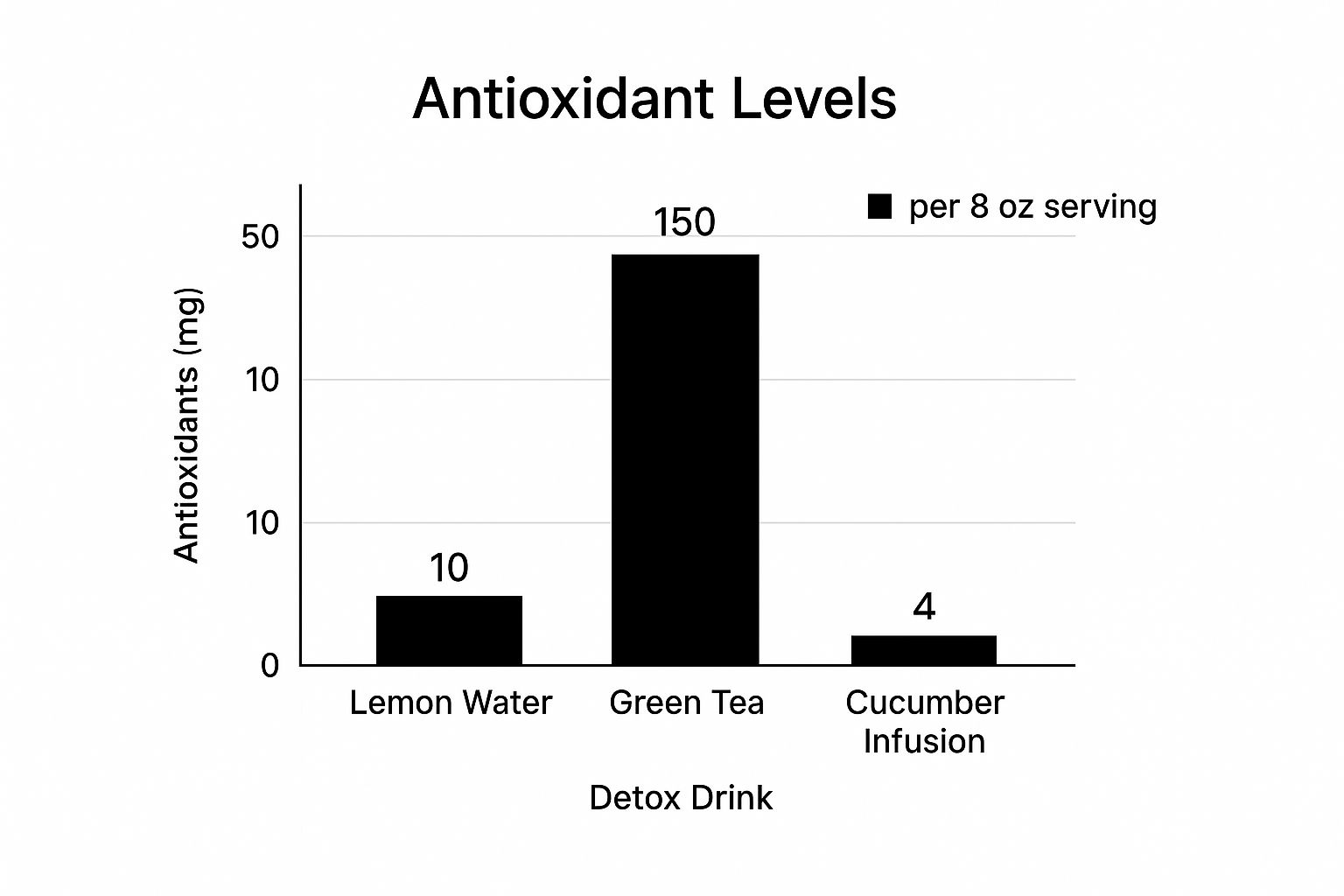
As you can see, just swapping your morning lemon water for a cup of green tea can give your antioxidant consumption a serious boost.
Mastering Hydration for Optimal Cleansing
Once you've cleaned up your diet, the next piece of the puzzle for a successful at-home detox is getting your hydration right. Water is the unsung hero of your body's cleansing system. It acts as the delivery service that brings nutrients to your cells and, just as importantly, flushes out toxins and waste through your kidneys and sweat. But truly effective hydration is about more than just hitting a target of eight glasses a day.
Imagine your body’s detox system is a busy factory. The healthy food you eat provides the tools and the workers, but water is the plumbing and the conveyor belts that keep the entire operation running. Without enough of it, waste gets stuck, creating a backlog that puts extra strain on your liver and kidneys. Staying hydrated keeps these pathways clear and efficient, helping your body get rid of what it doesn’t need.
Beyond Basic Water: Smart Hydration Strategies
If you find it tough to drink enough water throughout the day, you're definitely not alone. The secret is to make hydration both easy and enjoyable. It's also useful to know what proper hydration looks and feels like. One of the simplest signs is the color of your urine—it should be a pale, straw-like yellow. If it's dark yellow, that's a clear signal your body is asking for more water.
Here are a few practical tips to increase your water intake and make every sip work harder for you:
- Start Your Day with Water: Before you even think about coffee, drink a large glass of water. After a full night's sleep, your body is naturally dehydrated. This simple morning habit rehydrates your system and gives your metabolism a gentle nudge to get going.
- Add Natural Flavor: If plain water just isn't exciting, try infusing it. Toss some slices of cucumber, lemon, fresh mint, or a few berries into a big pitcher of water. It adds a refreshing taste without any sugar or artificial junk.
- Don't Forget Electrolytes: When you sweat, you lose more than just water; you also lose critical minerals known as electrolytes, such as sodium, potassium, and magnesium. These are essential for everything your cells do. If you’re physically active, consider adding a tiny pinch of high-quality sea salt or a clean electrolyte powder to your water to replace what you've sweated out.
Movement and Sleep Practices That Enhance Natural Cleansing
While food and water are the fuel for your body's cleanup crew, movement and sleep are the secret ingredients that make the whole process run smoothly. When you're learning **how to detox at home**, it’s easy to focus only on what you eat. However, your body’s most profound cleansing happens when it's moving gently and resting deeply. These two elements are fundamental for supporting your natural detox pathways.
Think of your lymphatic system as your body's waste removal service. The catch? It doesn't have its own pump. It relies entirely on your physical movement to circulate lymph fluid and clear out metabolic waste. Intense workouts aren't the goal here; in fact, they can be counterproductive during a focused detox. Gentle activities are far more effective.
Gentle Movement for Better Flow
The objective is to stimulate circulation and lymphatic flow without putting extra stress on your system. This helps your body efficiently shuttle toxins to the liver and kidneys for processing and elimination.
- Brisk Walking: A simple 30-minute walk each day can significantly boost your circulation and get things moving.
- Yoga and Stretching: Poses that involve gentle twisting and inverting can help massage your internal organs and encourage lymphatic drainage.
- Rebounding: Bouncing lightly on a mini-trampoline for just 10-15 minutes is a fantastic, low-impact way to activate your entire lymphatic system.
These gentle exercises are more than enough to support your body's cleansing functions without draining your precious energy reserves.
The Critical Role of Quality Sleep
Sleep is prime time for your body's repair and detoxification cycles. While you rest, your brain's unique waste clearance system, known as the glymphatic system, becomes much more active. It works diligently to flush out metabolic byproducts that build up during your waking hours. When sleep is consistently poor, this vital process gets interrupted, leading to a build-up of cellular waste.
Improving your sleep doesn't mean you need to overhaul your entire life. A simple evening routine can make a world of difference. To help you visualize this, here's a sample schedule you can adapt to fit your own lifestyle.
Daily Detox Lifestyle Schedule
A sample daily routine incorporating movement, hydration, and rest for optimal natural cleansing
| Time | Activity | Duration | Detox Benefit |
|---|---|---|---|
| 7:00 PM | Light, easily digestible dinner | 30 mins | Prevents digestive strain and bloating before bed. |
| 8:30 PM | Gentle stretching or yoga | 15 mins | Relieves muscle tension and calms the nervous system. |
| 9:00 PM | Power down all screens | 60 mins | Reduces blue light exposure, supporting natural melatonin production. |
| 9:45 PM | Apply Sole Serenity Detox Foot Pads | 5 mins | Prepares for passive, overnight support of cleansing processes. |
| 10:00 PM | Bedtime for deep rest | 7-9 hours | Allows the glymphatic system to fully activate and clear brain waste. |
This schedule shows how small, consistent actions create a powerful foundation for rest and recovery. The key is to signal to your body that it's time to wind down and repair.
Adding a Layer of Overnight Support
To make the most of your body's nighttime cleansing cycle, you can easily add a passive tool to your evening ritual. Sole Serenity Detox Foot Pads are designed to work while you sleep, using trusted natural ingredients like bamboo vinegar to complement your body's own detox efforts.
Applying the pads to the soles of your feet before bed is an effortless way to support your system from the ground up. This practice works in harmony with the gentle movement and improved sleep habits you’re already cultivating. It’s a powerful addition to a well-rounded home detox plan. You can find more information by exploring Lure Essentials' wellness products.
Turn Detox Into a Daily Ritual
Supporting your body doesn’t have to be complicated.
When you combine simple habits with consistent routines, small actions begin to add up.
If you’re looking for an effortless way to support your body overnight, Sole Serenity Detox Foot Pads are designed to work while you rest, helping you wake up feeling lighter and more refreshed.


